
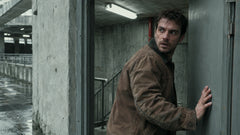

The Colour of Blade Runner 2049: Four Worlds, One Gradient Map, and How to Get the Look
Denis Villeneuve's Blade Runner 2049 (2017) won Roger Deakins his first Oscar, and its images are still among the most referenced in modern cinema. Ask people what the look is, though, and you get different answers: orange, teal, neon, grey. All of them are right. The film does not have one grade. It has four colour worlds, each with its own rules.
This article covers how the look was made on set, then measures 48 frames from the film, split into those four worlds, with vectorscopes and an analysis of tint, colour strength and skin at every brightness level. Finally it shows how the measurements were turned into four looks you can use on your own footage.
Want the four worlds on your own footage? OW Cinema Looks No.12 — Replicant
Blade Runner 2049: technical summary
| Category | Blade Runner 2049 (2017) |
|---|---|
| Director | Denis Villeneuve |
| Director of photography | Roger Deakins, CBE, ASC, BSC |
| Production designer | Dennis Gassner |
| Colourist | Mitch Paulson, EFilm (Autodesk Lustre) |
| Cameras | ARRI ALEXA XT Studio, with ALEXA Minis for vehicles, tight spaces and a drone shot |
| Lenses | ARRI/Zeiss Master Primes, mostly 27mm to 50mm, as wide as 14mm |
| Format | Open gate at 1.55:1, extracted for 2.40:1 and IMAX |
| Show LUT | The same on-set LUT Deakins used on Sicario |
| Award | Academy Award for Best Cinematography |
Cameras, lenses and the Las Vegas lighting are documented by Filmmaker Magazine and American Cinematographer. The camera package and the Oscar are confirmed by ARRI.
How the look was made
Almost none of the colour in Blade Runner 2049 was invented in the grade. Deakins has said the look was made on set, and that he changed little from the dailies to the final grade. Each world was built with light, gels and filters.
- Las Vegas: a filter on the lens. Deakins based the orange city on photographs of the 2009 Sydney dust storm. On stage, around 250 ungelled space lights were filtered through a custom Tiffen pack on the lens that combined Lee 790 Moroccan Pink and 105 Orange. Green-gelled Maxi-Brutes at the sides added a yellow highlight to the sky. On location in Budapest's old stock exchange, the windows were gelled with Moroccan Pink, Orange and Golden Amber.
- Wallace Corporation: light through water. Scenes in the Wallace headquarters were lit with 10K lamps bounced off pools of water, with wave machines moving the surface so the reflections ripple across the walls.
- Los Angeles: cold, wet and grey. Villeneuve wanted the city to feel cold, with rain or snow in every exterior. The references were Beijing smog and London Brutalism. Skin is lit and kept warm against it.
- Night: practical colour. The violet, magenta and cyan of the night scenes come from the city itself: holograms, advertising and signs in the frame.
That matters for anyone chasing the look. The orange of Las Vegas is not a grade on top of a normal image. It is a world in which every light source is orange to begin with, which is why the result behaves like a gradient map.
Look breakdown: measuring the four worlds
The measurements below are taken from 48 frames across the film, sorted into four groups: the orange desert and Las Vegas (6 frames), the golden interiors of the Wallace Corporation and the Vegas casino (9), the grey-green city of Los Angeles, including the snow (15), and the neon night scenes (9). A handful of frames that belong to none of these worlds, such as the forest in the memory sequence, were left out. The frames are Rec.709 home-video images, so they show the finished grade as most viewers see it.
1. The vectorscopes: four directions

Each world points in its own direction, and almost nowhere else. In the desert frames, 100% of the measurable colour sits between orange and yellow. In the Wallace interiors it is 96%. Los Angeles turns the other way: about 69% of its colour sits between green and cyan, and almost none of it is warm apart from skin. The night scenes put about 67% of their colour between blue, violet and magenta.
So the film is not graded teal and orange. Within each world, one colour direction dominates, and each scene commits to one world.
2. The gradient map: brightness decides the colour

Measured by brightness, the desert and the interiors behave in an unusual way. In the desert, the hue stays at almost exactly the same burnt orange from the shadows to the highlights. Only the colour strength changes: weak in the blacks, stronger and stronger up to the upper midtones, then slightly less in the brightest areas. The interiors work the same way, but a little yellower and darker, starting reddish in the shadows and moving towards amber.
That is what a gradient map does: every pixel gets a colour based only on how bright it is. Whatever colour an object had, it ends up on the same orange scale. In the film it happens because every light is filtered the same way; in a grade you have to build it deliberately.
Los Angeles is the opposite: very little colour at every brightness level, leaning teal-green in the shadows and midtones and drifting towards pale yellow-green in the highlights. The night scenes stay violet through the shadows and midtones and only turn warm in the brightest areas, where the lamps and signs are.
3. The waveforms: deep blacks, low ceilings
- Blacks are deep in every world. The darkest 1% of pixels sits between about 1% and 2% signal. None of the four worlds has milky, lifted blacks.
- The warm worlds never reach white. In the desert, the brightest 0.5% of pixels sits around 62% signal. In the Wallace interiors it is about 65%. Even the sun-filled orange haze is held far below white.
- The city has the most range. Los Angeles reaches about 91% signal in its brightest areas, from snow, overcast skies and windows. Its median brightness is the highest of the four, at about 23%.
- Interiors and nights live low. Half of all pixels in the Wallace interiors sit below about 11% signal; for the night scenes it is about 13%.
4. Skin: inside the tint, or outside it

This is the detail that makes or breaks a Blade Runner look. In the desert and the interiors, skin has the same hue as everything else: faces are swallowed by the orange and amber. In Los Angeles and at night, skin stays warm, at almost exactly the same hue as in the desert, while the world around it turns teal-green or violet. The difference in the city is more than 90 degrees on the colour wheel.
That is why a simple teal tint over the city looks wrong. It turns skin grey and lifeless. In the film, the world loses its colour and skin does not.
From measurement to a usable look
Because the film has four worlds, Replicant is four looks. Each one was fitted to the measurements of its own group of frames, then checked against test footage with real skin, concrete, night light and a colour chart.
| World in the film | Measured | What Replicant does |
|---|---|---|
| Desert, Las Vegas | One burnt orange at every brightness, colour strength rising to the upper midtones, highlights near 62% | Haze: a gradient map fitted to the measured hue and colour strength at ten brightness levels, with a low ceiling |
| Wallace interiors | Reddish shadows moving to amber, very dark overall, deep blacks | Amber: a yellower, darker gradient map fitted the same way |
| Los Angeles | Very little colour, teal-green world, warm skin, deep blacks | City: the world desaturated and tinted teal-green, with skin and lips protected from the tint |
| Night | Violet shadows and midtones, warm skin, warm lights | Neon: violet shadows and midtones, blues pushed to purple, skin fully protected |

Measured on the test footage, Haze and Amber land within a few degrees of the film's hue and close to its colour strength at almost every brightness level. City keeps skin at the film's warm hue, while the rest of the frame drops to the same low colour level as the Los Angeles frames.

What a LUT cannot do
A LUT changes colour and tone, value by value. It cannot recreate:
- Atmosphere. Dust, smog, rain and snow soften contrast and spread light in the air. That depends on the image structure, not on individual pixels. The Replicant DCTL adds a Glow tinted to each look for this reason.
- Light through water. The moving caustic reflections of the Wallace interiors are physical.
- Practical colour. The neon nights get their colour from signs and holograms in the frame. A look can push the shadows to violet; it cannot add the lights.
The looks sit most naturally on footage that already shares some of that design. Shoot Haze in haze, dust or low sun. Shoot Amber in tungsten-lit, dark interiors. Shoot City on overcast days, in concrete and rain. Shoot Neon at night, with coloured practicals in frame.
Recreating the look by hand in DaVinci Resolve
If you prefer to build it yourself, this is the order that follows the measurements.
Haze and Amber: build a gradient map
- Normalise. Transform the log footage to Rec.709 or use a colour-managed timeline, and balance exposure and white balance.
- Remove the original colour. Bring saturation down to around 10 to 20%. What remains is the brightness information the map will colour.
- Colour by brightness. Push the shadows, midtones and highlights towards the same orange (for Haze) or amber (for Amber) with the Lift, Gamma and Gain wheels, strongest in the midtones and upper midtones.
- Lower the ceiling. Bring the highlights down so whites stay around 60 to 65%. Keep the blacks deep.
City: desaturate the world, not the people
- Contrast first. Deep blacks around 1 to 2%, no lift.
- Drain the colour. Lower saturation to about half, and pull yellows and greens towards a cool green.
- Tint the world. Add a small teal-green offset to the shadows and midtones and a pale yellow-green to the highlights.
- Protect skin and lips. Use a qualifier on skin in a parallel node and keep it out of the tint and desaturation. This step makes the look.
Neon: violet nights
- Darken the overall image so the midtones sit low.
- Push the shadows and midtones towards violet, and rotate blues towards purple in Hue vs Hue.
- Keep skin out of the tint with a qualifier, and let the brightest lights stay warm.
Frequently asked questions
What camera was Blade Runner 2049 shot on?
The ARRI ALEXA XT Studio with ARRI/Zeiss Master Prime lenses, with ALEXA Minis for vehicles and tight spaces. Deakins tested the ALEXA 65 but found it too sharp for the film.
Who was the cinematographer of Blade Runner 2049?
Roger Deakins, who won the Academy Award for Best Cinematography for the film.
Why is Las Vegas orange in Blade Runner 2049?
Deakins based it on photographs of the 2009 dust storm in Sydney. The colour was created on set with a custom Tiffen filter pack combining pink and orange, and with gelled lights, not added in the grade.
Is Blade Runner 2049 teal and orange?
No. The film is not graded teal and orange. It switches between four worlds: orange desert, golden interiors, a grey-green city and violet nights. Each one stays within its own colour direction.
What is a gradient map look?
A look in which the colour of each pixel is decided by its brightness, not by its original colour. In Blade Runner 2049, the desert and the Wallace interiors behave this way: everything ends up on one orange or amber scale.
Why does skin look natural in the city scenes?
Because skin is kept out of the tint. Measured on the frames, skin stays warm while the rest of the frame turns teal-green and loses almost all its colour.
Can a LUT recreate the Blade Runner 2049 look?
A LUT can recreate the colour and tone of each world, which is why Replicant has four separate looks. It cannot recreate atmosphere, caustics or practical lights. A DCTL can add a glow on top.
Bring the four worlds to your own footage
Replicant
Four original looks inspired by the colour worlds of Blade Runner 2049: Haze, Amber, City and Neon. Fifteen camera profiles in one download, from Sony S-Log3 and ARRI LogC to Apple Log and Rec.709. The DCTL puts all four in one DaVinci Resolve Studio node, with Skin Protection and an adjustable Glow.
Replicant is an original look by OFFWHITECOLOR. It is not affiliated with or endorsed by the film Blade Runner 2049, its makers or its studios. Measurements were taken from home-video frames for analysis.


